Caramel Layer Cake with Vanilla Bean German Buttercream

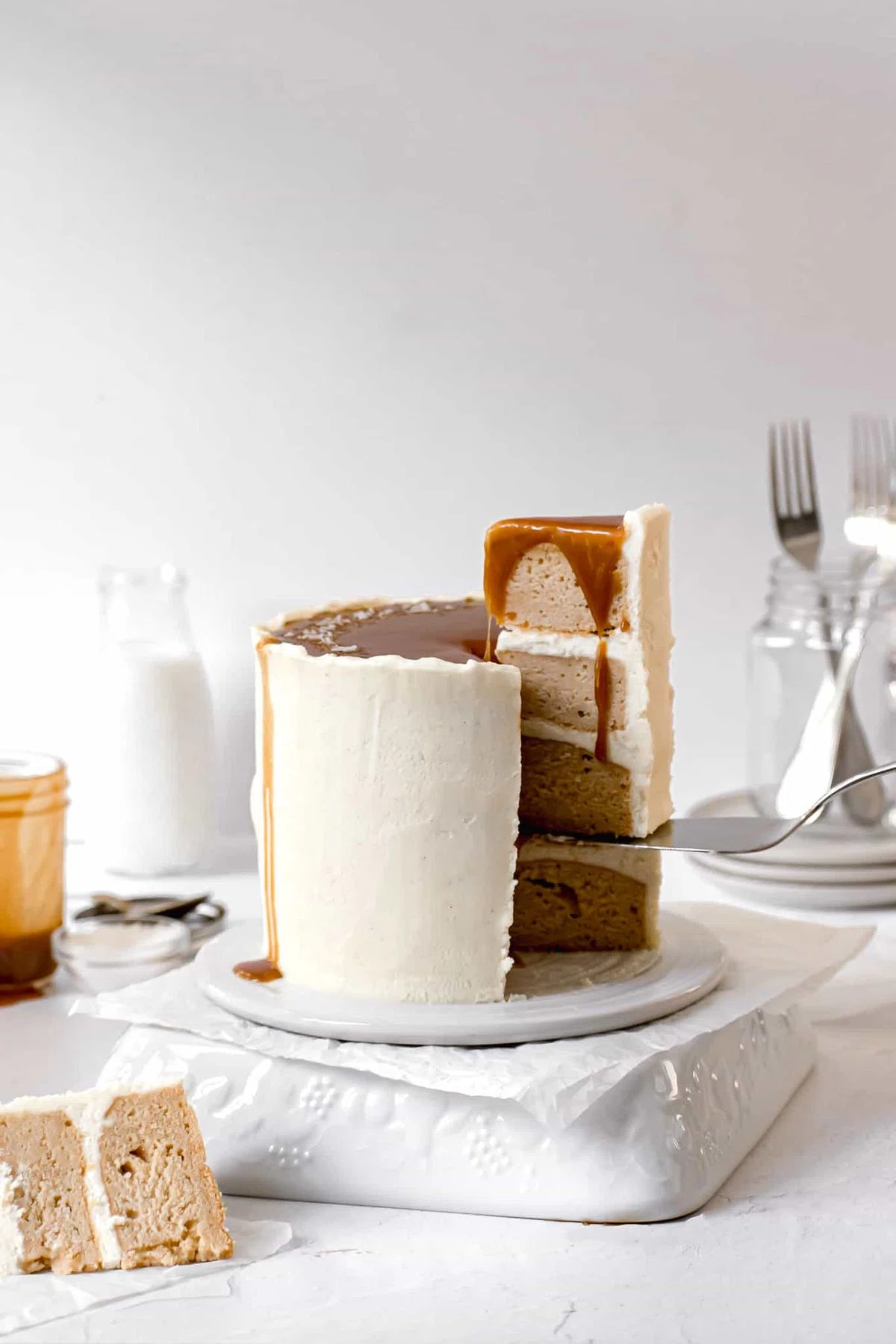
This caramel layer cake with vanilla bean german buttercream is made with homemade caramel sauce baked right in the cake! The cake layers are moist, on the denser side, and have sweet notes of caramel, while the german buttercream is light and creamy.
Ingredients
Caramel Sauce
Cake
German Buttercream
Instructions
Caramel Sauce
- Step 1
In a small saucepan, whisk together the sugar, salt, cream of tartar, and water. Heat over medium high heat, swirling often to encourage even cooking. When it comes to a boil reduce heat to medium.
- Step 2
When the color turns an even medium amber color remove from heat and add the butter one tablespoon at a time, whisking to combine. Whisk in the heavy cream and vanilla. Allow to cool for a few minutes before pouring into a bowl to cool completely.
Cake
- Step 3
Preheat the oven to 350 degrees. Grease and line 3 6 inch cake pans with parchment paper.
- Step 4
In the bowl of a stand mixer fitted with the paddle attachment, whisk together the flour, sugar, baking powder, and salt.
- Step 5
In a separate bowl combine the caramel sauce, yogurt, milk, and vanilla.
- Step 6
Cut up the butter into small cubes and add to the dry ingredients. Mix on low speed until it resembles wet sand.
- Step 7
Add half of the wet ingredients to the dry, then scrape down the bowl. Add the rest of the wet ingredients and mix until just combined.
- Step 8
Lastly, beat in the eggs until fully combined.
- Step 9
Pour batter into the prepared pan and bake for 32-38 minutes.
German Buttercream
- Step 10
Start with the pastry cream. Heat the milk in a saucepan, and bring to a simmer or about 200 degrees F.
- Step 11
Whisk the egg yolks, sugar, and cornstarch together for 2-3 minutes until light in color.
- Step 12
Once the milk is simmering, slowly pour half into the egg-sugar mixture, whisking at the same time to temper the eggs.
- Step 13
Pour everything back into the saucepan and heat over medium heat, whisking constantly. After a couple minutes, a layer of bubbles will form over the top and it will begin to thicken.
- Step 14
Once the bubbles disappear, continue whisking for one more minute, then remove from heat.
- Step 15
Transfer to a bowl and cover with plastic wrap, pressing it directly up against the pastry cream to prevent a skin from forming. Chill overnight.
- Step 16
Make the buttercream by beating the pastry cream for about 10 minutes on low speed until it warms up to about 70 degrees.
- Step 17
Add the butter, a few cubes at a time, and beat on medium speed. If it looks curdled at all, continue beating on low speed until smooth.
- Step 18
Add the mascarpone, vanilla paste, and salt, and beat until fully incorporated.
Assemble
- Step 19
Secure the first cake layer on the cake stand with a small amount of frosting on the bottom. Use a cookie or ice cream scoop to measure out the frosting for each layer. I used a 3 tablespoon cookie scoop and put 3 scoops of frosting on each layer. Place the second cake layer on top, and add another 3 tablespoon of buttercream on top, then place the last cake layer on top.
- Step 20
If your cake layers were frozen overnight then there is no need for a crumb coat. For this smooth buttercream look with a ridge, add an even layer of buttercream around the sides and smooth over with a straight edged frosting scraper. Leave a ridge around the top of the cake to hold in the caramel sauce.
- Step 21
Pour the remaining caramel sauce on top of the cake and add flakey sea salt, if desired.
- Step 22
Keep the cake at room temperature until ready to serve.
Tips & Tricks

@sloanes-table
Hi! I'm Sloane, welcome to Sloane’s Table! I am a Dartmouth College alumna, professional baker, recipe developer, and food photographer. Here, you will find tried & true bakery-worthy recipes ranging from simple sweets to technical pastries. Whether you are looking to challenge yourself and improve your baking skills or just want an easy, trust-worthy recipe, you're in the right place.
Per serving
Be the first to review this recipe and earn a 20% Bonus
Level up & unlock free Premium by reviewing recipes!
