
From the Cook
From the Cook
From the Cook
1/4
Low-Calorie Cheesecake


This recipe also lives on Jule’s Menu. Show them some love by checking it out! 😊
Check out original post! 😊
Instructions
1
|
Preheat the oven to 140°C (285°F) using conventional oven settings (top and bottom heat). Line a springform pan with parchment paper and grease the sides with a little butter or rapeseed oil. Place the erythritol in a blender and blend briefly until it resembles powdered sugar. If using powdered sugar, you can skip this step.
2
|
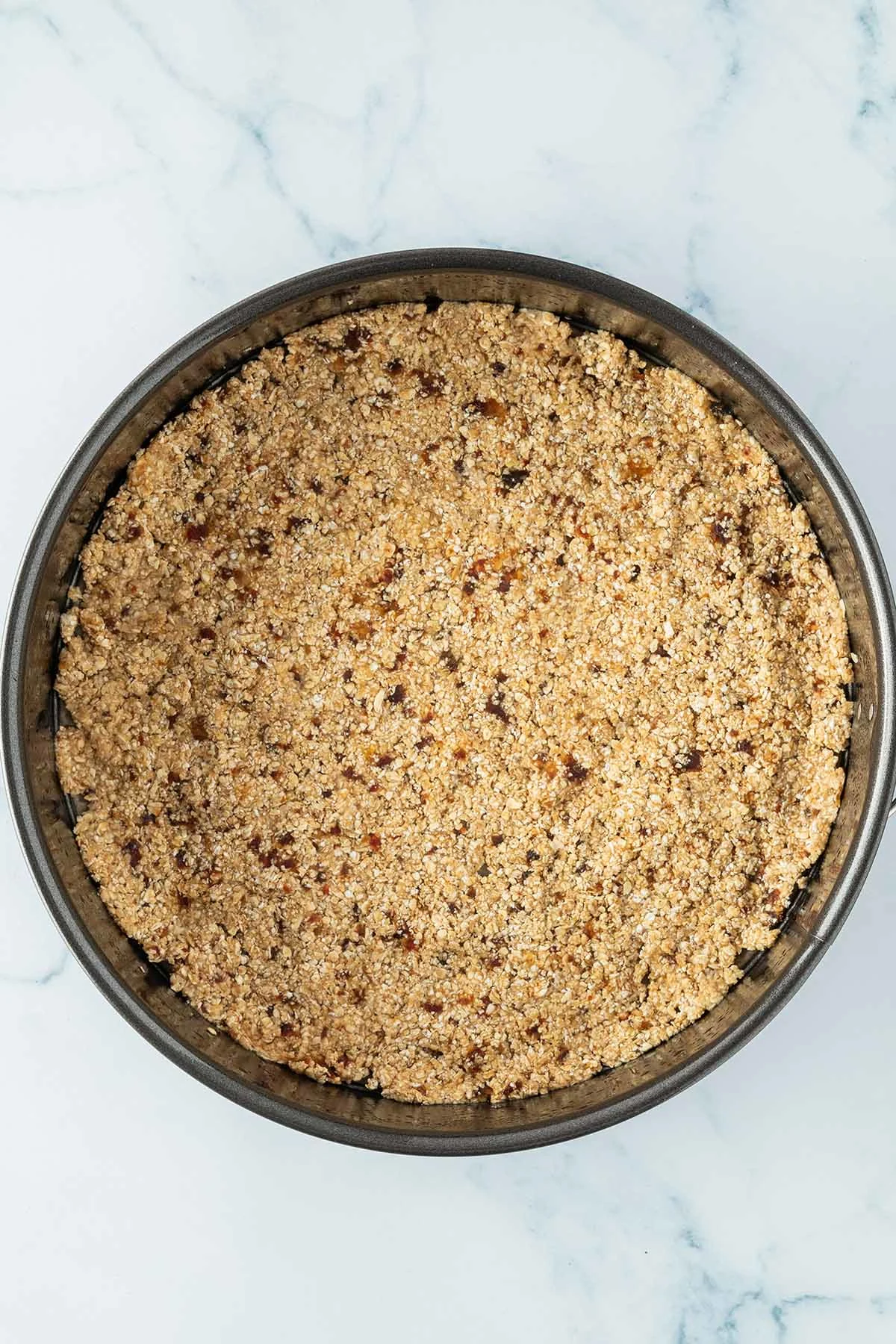
For the base, roughly chop the dates with a knife and finely chop them together with the rolled oats in a food processor. Add the egg and oil and continue mixing until a sticky, slightly chunky dough is formed.
3
|
Pour the dough into the springform pan, spread it with your fingers and press it flat on the bottom.
4
|
Place low-fat quark, yogurt, cream cheese, vanilla extract, erythritol powdered sugar, and starch into a mixing bowl and mix until smooth using a hand mixer.
5
|
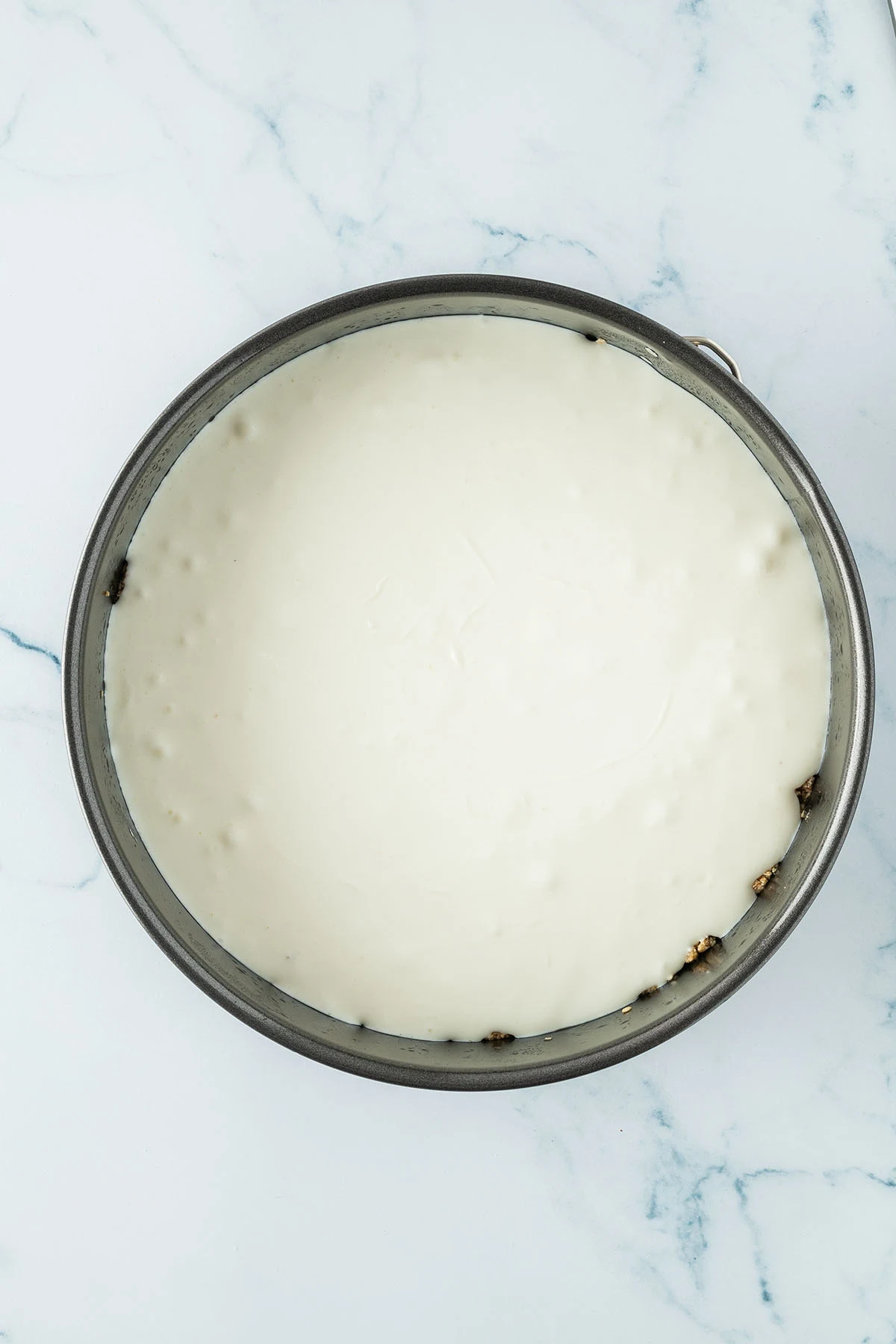
Pour the quark mixture onto the base, spread it evenly, and bake the cake for 50 minutes at 140°C (285°F) using conventional oven settings (top and bottom heat). Important: After 50 minutes, the cake will probably still look a little wobbly in the middle. This is intentional. Therefore, do not leave it in the oven any longer. It will firm up slightly as it cools, so it will have the perfect consistency when served.
6
|
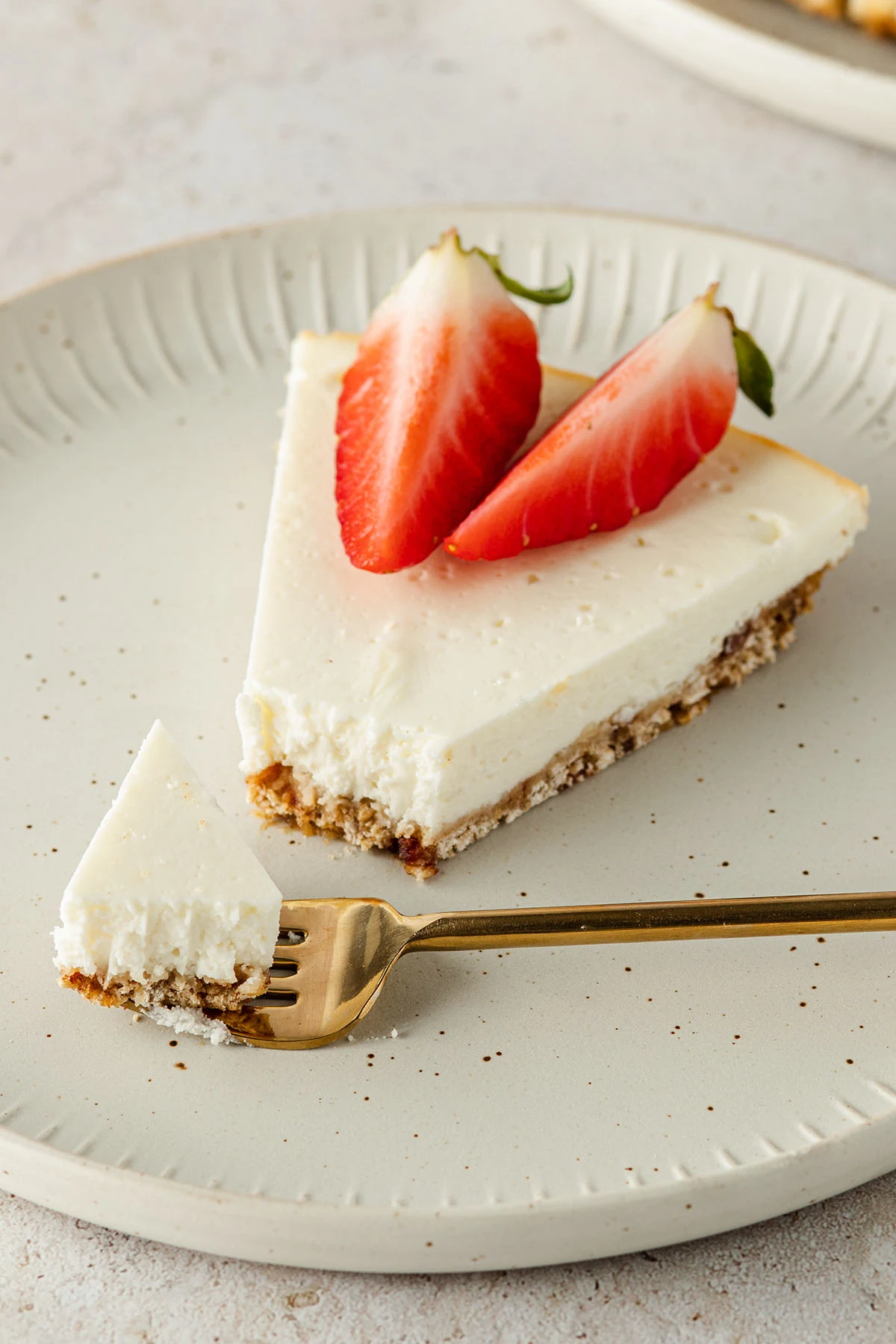
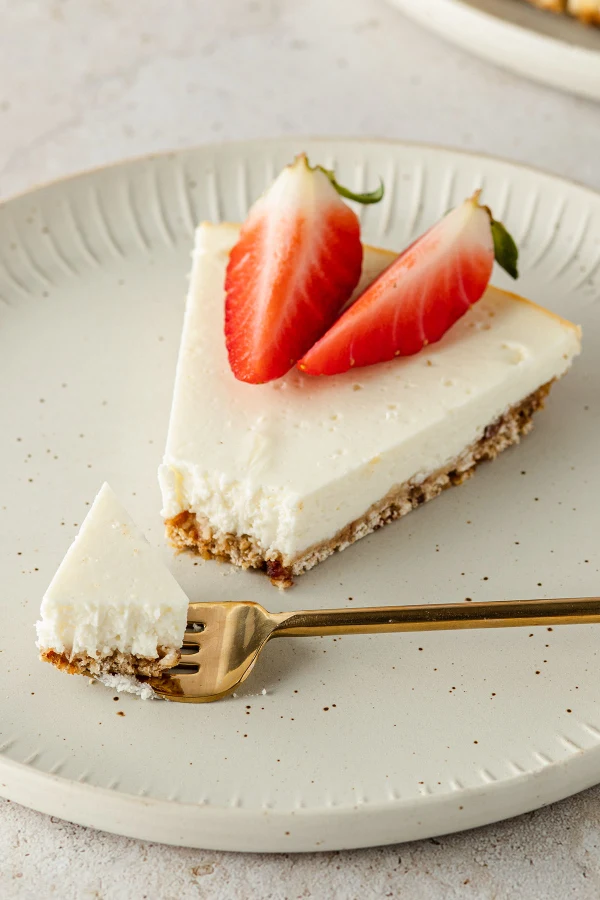
Allow the cheesecake to cool at room temperature for at least 30 minutes before serving, then refrigerate for at least 1 hour. Carefully remove the cheesecake from the springform pan, cut it into 12 (or 9) equal slices, and serve chilled.
My Calorie Intake
Review & Earn
Be the first to review this recipe and earn a 20% Bonus
Level up & unlock free Premium by reviewing recipes!
My Notes
Your kitchen notebook is waiting.
Whether it's a recipe tweak or an inspiration burst — jot it down here.
Recipe Facts
Diet at a Glance
 Vegetarian
My Calorie Intake
Smart Nutrition 
Nutrition Per Serving
Percent Daily Values are based on a 2,000 calorie diet. Your daily values may be higher or lower depending on your calorie needs.
Glycemic Analysis
Glycemic Index
Glycemic Load


No Recipes Available

EXPLORE
Looking for more?
Use our smart searchtool, explore by category, or browse your customized food feed.